

Why some roses cut better than others
A rose bed is a generous thing, but not every rose is generous in a vase. Some varieties drop their petals within a day, some hold their heads so loosely that a single stem looks limp, and a few sulk entirely once severed from the plant. Others will give you seven to ten days of colour from a single cut stem, often with scent that fills a whole room. The difference is not luck; it is breeding, and it is worth choosing deliberately.
The good news is that you do not need a separate cutting garden to enjoy roses indoors. A few well-chosen shrubs in a border, a trio in large pots by a south-facing wall, or a shared bed on an allotment will all supply plenty of material from early June until the first hard frosts.
What to look for when choosing
Before you fall for a photograph in a catalogue, check four things. A rose that scores well on all four will earn its space many times over.
- Repeat flowering. Once-flowering roses give a glorious few weeks and then nothing. For a steady supply of bouquets, choose repeat-flowering types that flush again every six to eight weeks.
- Fragrance. Scent is half the pleasure of bringing roses indoors. Old roses, and the best of the modern English shrub roses, tend to outperform showier but scentless varieties.
- Stem length and stiffness. Long, firm stems stand up in a vase without wire. Hybrid teas and many shrub roses are ideal; very short or floppy varieties are best left in the border.
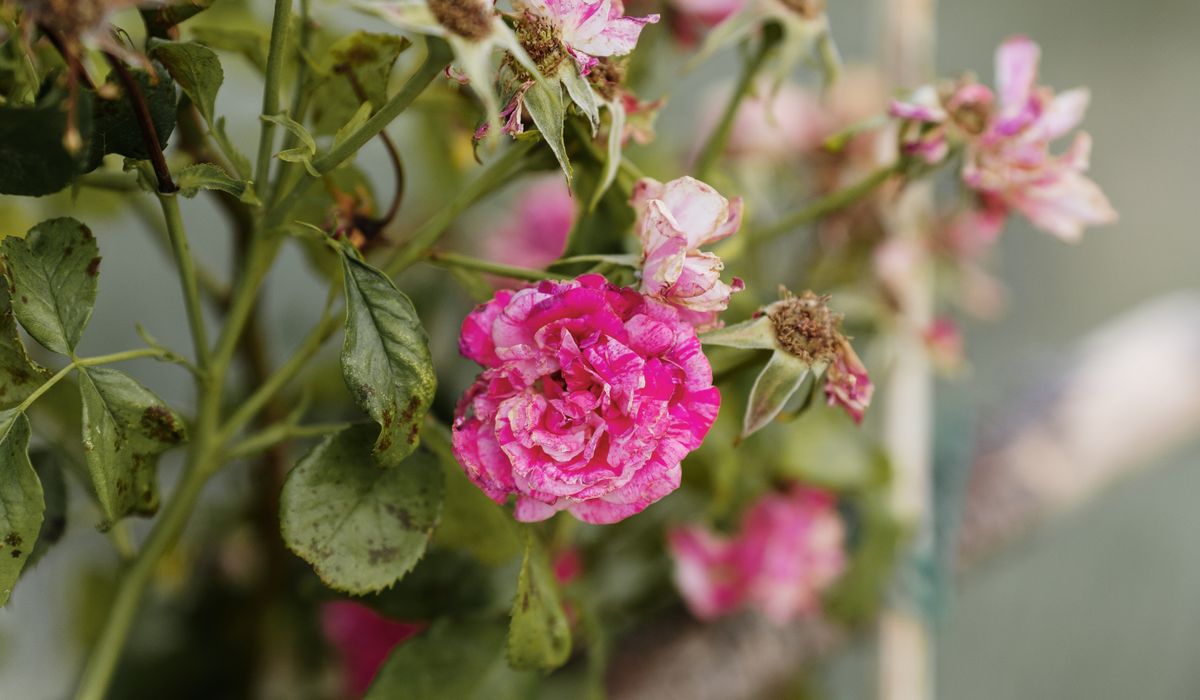
- Vase life and petal substance. Thick, waxy petals last far longer than thin, papery ones. As a rule, pale and heavily ruffled flowers shatter fastest.
Reliable varieties to try
These are all widely grown in the UK and perform well in our damp, changeable summers. Plant bare-root roses between November and March for the best start.
- Deep red and crimson: 'Munstead Wood' and 'Darcey Bussell' are compact, intensely perfumed and repeat reliably. 'William Shakespeare 2000' is superb in a vase, though it wants good air movement to avoid blackspot.
- Cream, white and blush: 'Desdemona' has excellent substance and a fresh tea scent. 'Iceberg' is almost indestructible, flowering in generous sprays that make lovely posies.
- Apricot and gold: 'Lady of Shalott' and 'Teasing Georgia' both cut well and keep flowering into October.
- Cluster-flowered shrubs: 'Scepter'd Isle' and 'Penelope' give you sprays of smaller blooms, perfect for jugs and jam-jar arrangements on a community table.
- Long-stemmed classics: 'Elina', 'Just Joey' and 'Whisky Mac' are old-fashioned hybrid teas bred for the cut-flower trade and still hard to beat.
If you are planting a shared bed, mixing three or four of these gives you colour and scent across the whole season rather than a single flush in June.
Growing a cutting bed, alone or with others
A bed roughly three metres by one metre, in full sun for at least six hours, will keep a household in flowers all summer. Prepare it well: fork in plenty of garden compost, plant roses about 45cm apart, and mulch thickly each spring. Feed with a balanced rose fertiliser in March and again after the first flush, and keep water on them during dry spells — roses in a cutting regime are working hard.
On an allotment or in a community garden, a communal cutting bed works beautifully. Agree who plants what, keep a shared bucket and pair of secateurs in a shed, and leave a sign inviting plot holders to take a stem or two. Deadheading is the one job everyone can share, and it is exactly what keeps the plants flowering.
How to cut and condition stems
Cut in the morning, once the dew has dried but before the heat of the day. Take a clean bucket of tepid water to the plot with you so stems never travel dry. Use sharp secateurs and cut just above a leaf with five leaflets, leaving a strong outward-facing shoot below to carry on growing. Aim to remove no more than a third of the plant at once.
- Plunge each stem into the bucket immediately after cutting.
- Strip the lower leaves so none sit below the waterline, and remove thorns from the bottom third of the stem.
- Re-cut the base at a slant under water to prevent an airlock in the stem.
- Stand the bucket in a cool, dark place for at least four hours, ideally overnight. This conditioning is what makes the difference between three days and ten.
Woody, thick-stemmed roses sometimes benefit from searing: dip the bottom two centimetres in just-boiled water for ten seconds, then straight into deep cold water.
Arranging and keeping the display going
Use a clean vase — a rinse with hot soapy water is enough — and fill it with lukewarm water plus flower food, or a drop of thin bleach if you have none. Recut the stems at an angle every two days and change the water at the same time. Keep arrangements away from direct sun, radiators and bowls of ripening fruit, which release ethylene and shorten vase life dramatically.
Arrange loosely, letting each bloom sit clear of its neighbour; tightly packed roses bruise and brown at the edges. Mixed with a few stems of alchemilla, mint or scented geranium from the same plot, a small bunch looks far better than a formal bouquet.
Above all, keep cutting. Every stem you take and every faded flower you remove encourages the plant to push out another bud, so the more you share — with neighbours, with the school fete, with anyone who needs cheering up — the more your roses will give you back.





John Doe
14 January, 2022Having no content in post should have adverse..
Chauffina Carr
10 April, 2022We use these tests all time! Killer stuff!
Jim Séchen
16 July, 2022Thanks for all the comments, everyone!